You Won’t Believe What This Serbian City Hides – Jaw-Dropping Architecture Everywhere
Novi Sad isn’t just another European city lost in the shadows of Belgrade or Dubrovnik. Trust me, I was skeptical too—until I walked its streets and saw buildings that looked like they leapt out of a dream. From Austro-Hungarian elegance to brutalist surprises, the architecture here tells stories no guidebook prepares you for. It’s real, raw, and totally unforgettable. If you're into places where history and design collide in the coolest ways, this is your next must-visit.
First Impressions: A City That Feels Alive
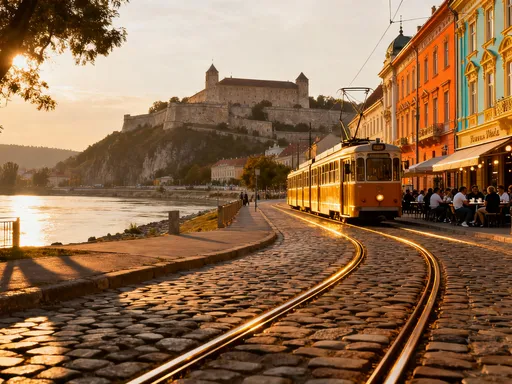
Arriving in Novi Sad feels less like stepping into a museum and more like entering a living room where generations have left their mark. The first thing that catches the eye is the commanding silhouette of Petrovaradin Fortress perched high above the Danube River, a stone sentinel watching over the city’s rhythm. As you descend toward the center, cobbled lanes unfold beneath your feet, lined with buildings painted in soft ochres, faded pinks, and mint greens—each facade whispering a different era. The urban layout is refreshingly human-scaled, a deliberate contrast to the grand boulevards of larger Balkan capitals. There are no overwhelming traffic arteries or soulless high-rises; instead, low-rise structures and tree-lined squares create a sense of calm intimacy.
What truly sets Novi Sad apart is how effortlessly it balances history with everyday life. Cafés spill onto sidewalks beneath wrought-iron balconies, their patrons sipping strong coffee as trams glide past with a gentle chime. In the morning light, golden rays catch the ornate cornices of baroque revival buildings, casting intricate shadows on the pavement. By late afternoon, families gather in parks, children chasing bubbles near fountains tucked between 19th-century administrative buildings. Unlike many European destinations overtaken by mass tourism, Novi Sad retains its authenticity. There are no souvenir stalls crowding every corner, no guided tour groups blocking narrow alleys. Instead, you witness life unfolding naturally—shopkeepers arranging bread in front of pastel-colored bakeries, students biking past murals that honor local poets and musicians.
This organic atmosphere makes the city instantly welcoming, especially for travelers seeking depth without the chaos. The architectural landscape isn’t preserved behind glass; it’s lived in, used, cherished. A woman hangs laundry from a balcony carved with floral motifs, a butcher sharpens his knife beneath a faded Secessionist awning, and an elderly man reads the paper on a bench shaded by a linden tree planted over a century ago. These small moments, layered into the city’s fabric, offer a rare kind of beauty—one rooted not in perfection, but in continuity. For those who appreciate urban spaces that breathe and evolve, Novi Sad offers a quiet revelation.
Petrovaradin Fortress: More Than Just a Landmark
Rising from the right bank of the Danube, Petrovaradin Fortress is not merely a scenic backdrop—it is the city’s architectural and historical anchor. Built primarily in the 18th century by the Habsburg Monarchy, this massive citadel was designed as a defensive stronghold against Ottoman expansion. Its strategic position on a rocky outcrop allowed surveillance of the river for miles, and its complex network of tunnels—often referred to as the “honeycomb”—was engineered to withstand prolonged sieges. Today, the fortress remains one of the best-preserved examples of Vauban-style military architecture in Europe, a testament to the ingenuity of its time. Yet what makes it truly remarkable is how seamlessly it has transitioned from a war machine to a cultural heart.
Visitors ascending the central staircase are greeted by sweeping views of the Danube and the city below, but it’s the details that linger. The clock tower, one of the fortress’s most iconic features, famously runs backward—its hour hand moves counterclockwise, a quirk said to confuse enemy forces in centuries past. Now, it serves as a charming symbol of Novi Sad’s playful spirit. Around the courtyard, former barracks and armories have been repurposed into galleries, performance spaces, and even a small museum detailing the fortress’s layered past. During summer, the complex becomes the stage for the EXIT Festival, one of Europe’s most renowned music events. But even outside festival season, the space pulses with life—artists sketching in shaded alcoves, couples strolling through arched passageways, and families picnicking on sun-drenched stone terraces.
The fortress’s structural brilliance lies not just in its scale, but in its integration with the landscape. Thick stone walls follow the natural contours of the hill, blending defense with geography. Underground, the labyrinth of tunnels stretches over 16 kilometers, once used to store weapons, house troops, and facilitate covert movement. Some sections remain closed for safety, but guided tours offer glimpses into this subterranean world, where damp air carries echoes of centuries. Engineers of the era employed advanced ventilation and acoustic warning systems—holes drilled into walls allowed guards to hear approaching footsteps from afar. These innovations, combined with the fortress’s enduring presence, underscore a deeper truth: great architecture serves both function and legacy. Petrovaradin is no relic; it is a living monument, adapting across time while preserving its core identity.
The Old Town Walk: Where Styles Collide Beautifully
Stari Grad, or Old Town, is Novi Sad’s architectural jewel box—a compact district where walking just a single block can transport you across centuries of design evolution. Begin at Liberty Square, the city’s central plaza, where the Neo-Renaissance City Hall dominates with its symmetrical façade, arched windows, and copper dome. Constructed in the late 1800s, the building reflects a period of civic pride and urban modernization, when Novi Sad emerged as a cultural hub within the Austro-Hungarian Empire. Across the square stands the Bishop’s Palace, a striking example of Baroque Revival architecture with its curved gables, sculpted pediments, and richly decorated entrance. The contrast between the two structures is deliberate, each asserting its institutional importance through distinct aesthetic languages.
Just steps away, the Nameless Church—so called because it lacks official religious affiliation—adds another layer to the mosaic. Its austere façade and slender bell tower evoke a sense of quiet solemnity, yet its interior reveals delicate frescoes and hand-carved wooden pews. This blending of styles isn’t accidental; it reflects the city’s multicultural past, where Serbian Orthodox, Catholic, and Jewish communities coexisted and contributed to the built environment. As you wander down Zmaj Jovina Street, one of the oldest thoroughfares, you’ll notice how buildings from different eras stand shoulder to shoulder. A Secessionist apartment block with flowing floral motifs in stucco sits beside a neoclassical bank building adorned with Ionic columns. The harmony isn’t forced—it feels organic, as if each generation added its voice without erasing the last.
For those who love architectural detail, the walk offers endless discoveries. Look up to spot sculpted masks above doorways—some smiling, others stern—meant to ward off evil spirits or simply reflect the owner’s personality. Wrought-iron balconies twist into vine-like patterns, many still bearing original ceramic tiles in deep blues and earthy reds. Even the streetlamps, many dating to the early 20th century, feature ornate cast-iron designs that echo the craftsmanship of the buildings they illuminate. The best time to explore is early morning, when soft light filters through plane trees and the city is still waking. Alternatively, visit during golden hour, when the setting sun bathes the facades in warm amber, creating a photographer’s dream. Whether you’re an architecture enthusiast or simply someone who appreciates beauty in everyday spaces, this walk reveals how design can tell a city’s story without uttering a word.
Hidden Layers: Socialist-Era Buildings With Soul
Beyond the ornate facades of the Old Town lies another chapter of Novi Sad’s architectural narrative—one often overlooked by visitors. The post-World War II period brought a wave of modernist and brutalist construction, shaped by Yugoslavia’s socialist policies and urban planning ideals. While some travelers dismiss this era as monotonous or bleak, a closer look reveals buildings that are thoughtful, functional, and surprisingly humane in scale. Take the University of Novi Sad campus, for example, where academic buildings from the 1960s and 70s feature exposed concrete, geometric forms, and expansive courtyards. These structures were designed not just for efficiency, but to foster community—wide walkways encourage chance encounters, and open plazas host student gatherings, outdoor lectures, and seasonal markets.
Residential architecture from the same period also defies stereotypes. Housing complexes like those in the Detelinara neighborhood were built with families in mind, incorporating green spaces, playgrounds, and ground-floor retail units. Unlike the towering, impersonal blocks seen in some Eastern European cities, these buildings often rise only four to six stories, preserving a human scale. Balconies are deep and practical, many shaded by concrete canopies that double as rain protection. The use of raw materials—particularly béton brut, or unfinished concrete—is not a sign of neglect, but a deliberate aesthetic choice that emphasizes honesty in construction. Over time, weathering has softened their edges, giving them a dignified patina.
What makes these buildings endure is not nostalgia, but utility. They continue to serve their original purposes, housing thousands of residents and supporting daily life. Some have been gently renovated with energy-efficient windows and updated interiors, but without losing their structural integrity. This adaptive resilience speaks to a broader truth: architecture doesn’t have to be ornate to be meaningful. The socialist era prioritized accessibility, equity, and collective well-being, and these values are embedded in the design. Today, architects and urban planners are revisiting these neighborhoods with fresh eyes, recognizing their potential for sustainable redevelopment. For the observant traveler, walking through these districts offers a rare opportunity to see how ideology, material constraints, and human needs can converge into something both functional and quietly beautiful.
Religious Harmony in Stone and Paint
One of Novi Sad’s most striking architectural features is the close proximity of places of worship representing different faiths—Orthodox, Catholic, Lutheran, and Jewish—all within a few city blocks. This physical closeness is not merely coincidental; it reflects a long history of coexistence in a region often marked by division. The Cathedral of Saint George, a Serbian Orthodox church in the heart of the city, stands with its distinctive onion domes and richly painted façade, a centerpiece of religious and cultural life. Just a five-minute walk away, the Catholic Church of Saint Mary of the Rosary rises with its twin spires and neoclassical portico, a reminder of the city’s Austro-Hungarian Catholic community. Nearby, the Lutheran Church, with its modest steeple and clean lines, speaks to the influence of German-speaking settlers in the 18th century.
Equally significant is the Jewish presence, symbolized by the restored synagogue on Jevrejska Street. Once one of the largest Sephardic communities in the Balkans, Novi Sad’s Jewish population suffered greatly during World War II, and the synagogue fell into disrepair. Its meticulous restoration in recent years is not just an architectural achievement, but an act of cultural remembrance. The building’s Moorish Revival style—characterized by horseshoe arches, striped stonework, and intricate tile patterns—adds a unique texture to the cityscape. While it no longer functions as a regular place of worship due to the small size of the current community, it hosts cultural events and exhibitions, ensuring its legacy endures.
What’s remarkable is how these structures coexist without competition or conflict. Their architectural differences—onion domes versus spires, ornate frescoes versus minimalist interiors—are not hidden but celebrated as part of the city’s identity. Restoration efforts have been careful to preserve original materials and craftsmanship, often using traditional techniques to repair stained glass, woodwork, and masonry. These buildings are not relics frozen in time; they are active participants in civic life. The Orthodox cathedral hosts choirs and feast-day processions, the Catholic church welcomes weddings and concerts, and the synagogue serves as a venue for interfaith dialogues. By focusing on design rather than doctrine, Novi Sad offers a powerful example of how architecture can embody pluralism—not through grand statements, but through quiet, enduring presence.
Riverfront Revival: How the Danube Shapes the City’s Look
The Danube River is not just a geographic feature in Novi Sad—it is a defining force in its architectural and social character. The city’s embankment, particularly along Limanska Street and the Ribarska Ada area, has undergone a thoughtful transformation in recent decades, shifting from industrial use to a vibrant public space. Where cargo boats once docked, now riverside cafes, seasonal pavilions, and open-air galleries invite residents and visitors to linger. The design philosophy prioritizes accessibility and sustainability: wide pedestrian paths, native plantings, and low-impact lighting ensure that the river remains a shared resource rather than a barrier.
One of the most notable features is the network of reconstructed river islands, including Rit and Klisa, which function as ecological reserves and recreational zones. Wooden boardwalks meander through reed beds, offering views of herons, kingfishers, and sometimes even deer. Adaptive reuse projects have turned old fishing huts into cultural kiosks, where local artists sell handmade crafts or host small exhibitions. Along the main embankment, historic buildings have been repurposed—former warehouses now house design studios, bookshops, and waterfront restaurants with panoramic views. The architecture here respects the river’s rhythm; structures are elevated to withstand seasonal flooding, and materials like weather-resistant wood and stone blend naturally with the surroundings.
Urban planning decisions have deliberately limited car access, creating a car-light environment where walking, cycling, and public transport take precedence. This has fostered a slower, more contemplative pace of life. Locals gather in the evenings to stroll, jog, or sit on benches facing the water, watching the light change as the sun dips behind Petrovaradin Fortress. For visitors, the riverfront offers some of the best vantage points for photography, especially at sunset, when the sky turns pink and gold, reflecting off the slow-moving current. A coffee at one of the waterside terraces, enjoyed while watching boats glide by, becomes a moment of pure serenity. The Danube, in all its quiet majesty, reminds us that great cities are not just built—they are shaped by nature, time, and the people who cherish them.
Why Novi Sad Should Be on Every Architecture Lover’s Radar
Novi Sad’s architectural richness lies in its diversity, authenticity, and accessibility. Unlike cities where historic districts are cordoned off or overwhelmed by tourists, here every layer of history remains in dialogue with the present. From 18th-century fortifications to 21st-century riverfront revitalization, the city offers a rare continuity of design evolution. What makes it particularly appealing is that this depth comes without the price tag or crowds of more famous European destinations. A comfortable hotel in the city center costs a fraction of what you’d pay in Vienna or Prague, and reservations are rarely needed. The entire core is walkable, allowing visitors to explore at their own pace, discovering hidden courtyards, quiet churches, and unexpected murals around every corner.
For those who appreciate architecture not as a static display but as a living narrative, Novi Sad rewards slow travel. Two to three days is ideal—enough time to absorb the nuances of its streets, revisit favorite spots at different times of day, and engage with locals who take pride in their city’s heritage. There are no forced itineraries or over-commercialized tours; instead, you’re free to wander, observe, and reflect. The architecture here doesn’t shout for attention. It whispers—through the curve of a wrought-iron railing, the play of light on a weathered stone wall, the quiet dignity of a repurposed socialist-era hall. These are the details that stay with you, long after you’ve left.
In a world where many cities homogenize under global development pressures, Novi Sad stands as a quiet rebel—a place that honors its past without being trapped by it, embraces modernity without losing soul. It proves that beauty doesn’t require spectacle, and significance doesn’t depend on fame. For the thoughtful traveler, especially one who values authenticity, history, and design in equal measure, Novi Sad isn’t just worth a visit. It’s a revelation. And as the Danube flows steadily beneath its bridges, carrying stories from one century to the next, the city continues to write its own—brick by brick, arch by arch, in whispers worth listening to.