Lost in Tokyo’s Pulse: Where Public Spaces Breathe Life
Ever felt a city speak to you through its streets, parks, and stations? Tokyo isn’t just neon lights and bullet trains—its public spaces are living, breathing moments of connection. From quiet shrine corners to bustling plazas, I discovered how these shared zones shape the soul of the city. This is more than sightseeing; it’s immersion in the rhythm of daily life. In a metropolis of nearly 40 million people, the way Tokyo manages, designs, and inhabits public space reveals a deep cultural intelligence. These spaces do not merely accommodate crowds—they invite presence, reflection, and subtle human exchange. What makes them so compelling is not grandeur, but the quiet harmony between design, behavior, and intention. To walk through Tokyo’s public life is to witness a city that values stillness as much as speed, community as much as efficiency.
The Unseen Heartbeat of Tokyo
From the moment you step out of Narita or Haneda Airport, Tokyo begins to communicate—not through words, but through movement, sound, and spatial choreography. The first real encounter with the city’s pulse often comes at Shinjuku Station, the world’s busiest transportation hub, where over three million people pass through each day. Yet despite the staggering volume, there is no shouting, no shoving—only a quiet, disciplined flow. Travelers merge into streams of commuters, each person moving with purpose, guided by subtle cues: color-coded signs, floor markings, the soft chime of platform doors. This is not chaos; it is precision wrapped in calm. It reflects a collective understanding of shared space, where individual actions contribute to a greater urban rhythm.
Contrast this with a morning in Yoyogi Park, just a short walk from the urban intensity of Shibuya. Here, the city breathes differently. Joggers trace looping paths beneath ginkgo trees, tai chi practitioners move in synchronized silence, and couples stroll along tree-lined avenues. The park functions as a counterbalance to the city’s density, offering not just greenery but emotional equilibrium. What becomes evident is that public space in Tokyo is not an afterthought—it is a fundamental component of urban well-being. These spaces are designed not only for use but for feeling, allowing residents and visitors alike to recalibrate amidst the city’s relentless pace.
The significance of these environments lies in their ability to reflect cultural values. In Tokyo, public spaces embody principles of order, respect, and mindfulness. They are places where social norms are silently reinforced—removing shoes before entering a temple garden, queuing without barriers, speaking softly on trains. These behaviors are not enforced by rules alone but cultivated through shared expectations. The city’s public life thrives because it operates on mutual consideration. This is what gives Tokyo its unique character: a metropolis that feels both intensely active and profoundly peaceful at once.
Tranquility in Motion: Parks as Urban Sanctuaries
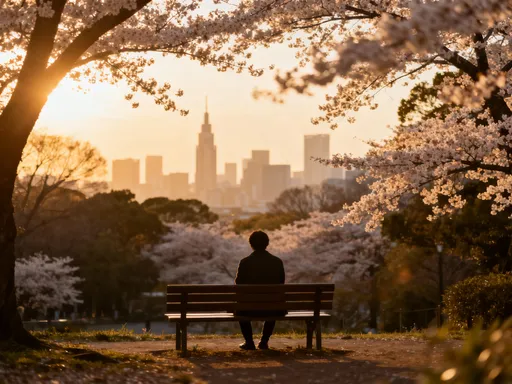
Amid the vertical sprawl of Tokyo’s skyline, parks serve as vital lungs for the city. Ueno Park, one of the most visited green spaces in Japan, exemplifies this role. Spanning over 53 hectares, it houses museums, a zoo, temples, and a large central pond. But beyond its attractions, the park’s true value lies in how it is used. During cherry blossom season, families spread blue tarps beneath blooming trees, sharing bento boxes and quiet laughter. In the early mornings, elderly residents practice group exercises, their movements slow and deliberate. At lunchtime, office workers retreat to shaded benches, closing their eyes for brief naps before returning to their desks.
Shinjuku Gyoen offers a different kind of serenity. Once an imperial garden, it blends French formal gardens, English landscapes, and traditional Japanese design. The result is a space that feels both cultivated and natural. Visitors walk along gravel paths, pause beside koi-filled ponds, or sit beneath maple trees that turn crimson in autumn. Unlike many Western parks that emphasize open lawns and recreational sports, Tokyo’s major parks prioritize contemplation. Benches are thoughtfully placed to face scenic views, and walking paths encourage meandering rather than rushing. This intentional design supports mental restoration—a crucial function in a city where stress levels can run high.
What sets these parks apart is the unspoken etiquette that preserves their tranquility. Loud conversations are rare, music is played privately through headphones, and littering is virtually nonexistent. Children play with energy but are gently guided to respect shared space. Even during peak festivals, there is a sense of contained joy—celebration without disruption. These norms are not policed but absorbed through cultural practice. The message is clear: public space is a gift, and its care is everyone’s responsibility. For visitors, observing these customs is not just respectful—it is a way to participate in the city’s quiet harmony.
Streets That Tell Stories: Pedestrian Life in Shibuya and Asakusa
While parks offer retreat, Tokyo’s streets provide immersion. Nowhere is this more evident than in Shibuya, where the famous scramble crossing becomes a daily performance of coordination and trust. As the traffic lights change, waves of pedestrians surge from all directions, converging in the middle like tides meeting. Yet collisions are rare. There is no central conductor—only an intuitive awareness of others’ paths. This moment, repeated thousands of times a day, illustrates how Tokyo’s public spaces function on collective intelligence. People move with confidence because they expect others to follow the same unspoken rules.
The design of the crossing enhances this flow. Wide sidewalks, clear signage, and elevated crossings for cyclists all contribute to safety and efficiency. Even the placement of vending machines—set back from high-traffic zones—shows attention to pedestrian comfort. These details may seem minor, but they accumulate into an environment where walking feels effortless. For tourists, standing at the center of the scramble offers a thrilling sense of being part of something larger—an urban organism in motion.
In contrast, Asakusa’s Nakamise-dori presents a different kind of street life. Leading to the historic Senso-ji Temple, this covered pathway buzzes with vendors selling traditional snacks, fans, and souvenirs. The pace is slower, the atmosphere more festive. Families browse stalls, children clutch paper lanterns, and elders sip green tea from small cups. Unlike the futuristic energy of Shibuya, Asakusa feels rooted in history. The street itself becomes a stage for cultural continuity—where old customs are passed down through commerce and ritual.
Both neighborhoods demonstrate how street design shapes experience. Shibuya emphasizes movement and modernity; Asakusa emphasizes tradition and sensory richness. Yet both succeed because they prioritize human scale. Narrower lanes, varied storefronts, and frequent resting points make walking enjoyable. Public seating, though limited, is strategically placed near landmarks. Even tactile paving—yellow textured tiles for the visually impaired—is seamlessly integrated into sidewalks. These features show that Tokyo’s streets are not just for transit but for engagement. They invite you to look, listen, and linger.
Transit Hubs: More Than Just Commuting
In most cities, train stations are functional—places to arrive and depart. In Tokyo, they are destinations in themselves. Tokyo Station, with its red-brick facade and grand dome, connects regional lines, bullet trains, and subway networks. But beyond transportation, it houses luxury department stores, gourmet food halls, and art exhibitions. Passengers don’t just rush through—they browse, dine, and explore. The station becomes a microcosm of urban life, where work, leisure, and culture intersect.
Ikebukuro Station offers another model of complexity. One of the city’s major hubs, it links multiple rail lines and serves as a commercial center for the surrounding neighborhoods. Underground malls stretch for blocks, offering everything from fashion boutiques to bookstores and ramen bars. During rush hour, the flow of commuters is astonishing—organized, swift, and silent. Yet late at night, the same corridors take on a different mood. Students linger over coffee, night workers head home, and couples walk hand in hand. The space adapts to the city’s shifting rhythms.
What enables this versatility is architectural foresight. Stations are built with layered vertical circulation—escalators, elevators, and wide corridors that prevent bottlenecks. Signage is multilingual and highly intuitive, using symbols and colors to guide navigation. Even the acoustics are managed—background music is soft, announcements are clear but not intrusive. These elements reduce cognitive load, making high-density environments feel navigable.
Moreover, stations function as social connectors. In the basement levels of many hubs, you’ll find “ekiben” counters selling regional specialty meals for travelers, or small shrines tucked into quiet corners. These touches reflect *omotenashi*—the Japanese spirit of hospitality. Travelers are not just processed; they are welcomed. The result is a transit experience that feels humane, even at peak capacity. For visitors, spending time in these spaces offers insight into how Tokyo balances efficiency with care.
Hidden Corners: Off-the-Beaten-Path Public Life
Beyond the famous districts, Tokyo reveals quieter dimensions in its lesser-known neighborhoods. Yanaka, part of the historic “Shitamachi” area, feels like a village within the city. Narrow lanes wind past wooden houses, family-run shops, and small temples. Cats nap in sunlit doorways, and bicycles lean against moss-covered walls. Unlike the polished modernity of central Tokyo, Yanaka embraces imperfection—peeling paint, uneven paving stones, and the occasional overgrown garden. Yet this is precisely its charm.
Public life here unfolds at a human pace. Elders sit on low stools outside their homes, chatting with neighbors. Children ride tricycles down quiet streets, supervised by watchful eyes from nearby windows. Community plazas host seasonal festivals—lantern displays in summer, handmade craft markets in winter. These spaces are not designed for tourists but for residents, which makes them authentic. There is no pressure to perform, no need to attract attention. Life simply happens.
Kiyosumi-Shirakawa offers a similar sense of intimacy. Known for its traditional tea houses and preserved Edo-era architecture, the neighborhood centers around a serene water garden. Locals stroll along stepping stones, feed koi fish, or meditate on wooden verandas. Nearby, independent cafes and art studios line the streets, attracting creatives seeking calm. The riverside paths invite slow walks, where you might spot kingfishers diving into the Sumida River or herons standing motionless in the shallows.
These areas remind us that public space is not only about grand design but about everyday use. Benches are worn from years of use, handrails are polished by countless touches, and trees are shaped by decades of pruning. They carry the imprint of community life. For travelers willing to wander beyond guidebook highlights, these neighborhoods offer a deeper connection—to the city’s history, its people, and its quieter joys.
Design Meets Culture: Why Tokyo’s Public Spaces Work
The success of Tokyo’s public spaces cannot be attributed to design alone—it is the fusion of architecture, culture, and behavior that makes them exceptional. One key concept is *ma*, the Japanese aesthetic of negative space. In urban planning, *ma* translates to intentional pauses—moments of stillness between structures, gaps between buildings that allow light and air to flow. This principle prevents overcrowding, even in densely populated areas. A small courtyard between towers, a quiet alcove in a station, or a bench facing an empty garden—all embody *ma*, offering mental and physical relief.
Another guiding philosophy is *omotenashi*, or wholehearted hospitality. This is evident in the cleanliness of public toilets, the availability of drinking fountains, and the inclusion of seating for the elderly and disabled. Even vending machines are stocked with both hot and cold drinks, anticipating diverse needs. These details reflect a mindset that prioritizes the comfort of others, even strangers. There is no expectation of payment or recognition—only a quiet commitment to dignity in shared environments.
Collective mindfulness also plays a role. In Tokyo, public space functions because people act with awareness of others. They avoid blocking pathways, speak softly in enclosed areas, and dispose of trash properly. This is not enforced by fines alone but by social expectation. Children are taught from an early age to respect communal areas, and this norm persists into adulthood. The result is an environment where trust replaces surveillance.
Design choices reinforce these values. Benches are often oriented toward views rather than foot traffic, encouraging contemplation. Public art is subtle—stone sculptures in parks, engraved manhole covers in streets—inviting discovery without distraction. Lighting is warm and layered, avoiding harsh glare. Even trash bins, though sparse, are strategically placed near vending machines and stations, reducing litter. Every decision, large or small, contributes to a sense of order and serenity.
How to Truly Experience Tokyo’s Public Life
To engage with Tokyo’s public spaces is not simply to visit them—it is to inhabit them with intention. Begin by slowing down. Instead of rushing from landmark to landmark, choose a single neighborhood and walk without a fixed destination. Let yourself get slightly lost. Notice the textures of walls, the patterns of tiles, the way light filters through trees. Carry a to-go coffee from a local kiosk and sit on a bench, watching people pass. These moments of stillness often yield the richest impressions.
Timing matters. Visit Ueno Park early in the morning to see locals exercising. Arrive at Shibuya Crossing just before sunset, when the neon signs begin to glow. Explore Asakusa on a weekday morning, when the crowds are thinner and the atmosphere more relaxed. For a peaceful evening, walk along the Sumida River, where the skyline sparkles against the water. Each hour reveals a different facet of the city.
Participate respectfully. If you see a neighborhood festival, observe first before joining. If you sit on a bench, leave space for others. Avoid loud conversations or phone calls in quiet areas. When in doubt, follow the lead of locals. Their behavior is the best guide to appropriate conduct. And don’t forget to smile—while formal greetings may differ, kindness transcends language.
Consider combining your walks with small rituals: buy a snack from a street vendor, sketch a scene in a notebook, or take photos with care. These acts deepen your connection to place. Most importantly, allow yourself to be present. Tokyo reveals itself not through grand gestures but through fleeting moments—a bow between strangers, the rustle of leaves in a hidden garden, the quiet hum of a train station at night. These are the threads that weave the city’s soul.
In the end, Tokyo’s public spaces teach us that urban life can be both efficient and poetic. They show that even in the largest metropolis, there is room for stillness, connection, and beauty. They invite us not to conquer the city, but to move through it with awareness and grace. To truly know Tokyo is not to check off attractions, but to feel its pulse in the spaces between.