You Won’t Believe What I Found at Boudhanath
Standing before the massive stupa of Boudhanath, I felt an unexpected calm wash over me. The air hums with prayer, prayer flags flutter like whispers, and every corner tells a story. This isn’t just a scenic spot—it’s a living spiritual heart. If you’re seeking authenticity in Nepal beyond the usual trails, Boudhanath delivers in ways you can’t imagine. Let me take you through its quiet magic and vivid soul.
First Encounter: The Moment Boudhanath Took My Breath Away
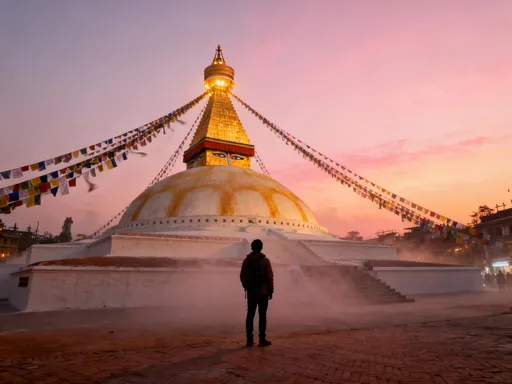
The first glimpse of Boudhanath Stupa from the main entrance is nothing short of breathtaking. As you step through the bustling market streets of Kathmandu’s outskirts, the world suddenly opens into a vast circular plaza dominated by the stupa’s immense white dome, crowned with a golden spire that catches the morning sun like a beacon. The sight alone slows your breath. Devotees move in a steady rhythm—spinning prayer wheels, murmuring mantras, their hands pressed together in reverence. Monks in maroon and saffron robes pass quietly, their presence adding to the atmosphere of serene devotion. The air carries the soft clink of butter lamps being lit inside nearby monasteries, mingling with the distant hum of Tibetan chants.
What struck me most was not just the scale of the structure, but the way it commands stillness. Even amidst the movement of pilgrims and the chatter of vendors selling incense and prayer beads, there’s a deep quiet that settles over the space. It’s a place where time seems to pause, inviting reflection. This first impression matters because it sets the tone for everything that follows—a reminder that Boudhanath is not a museum exhibit or a backdrop for photographs, but a living, breathing center of faith. The emotional weight of this moment stays with you, shaping how you walk, speak, and observe in the hours that follow.
For many visitors, especially those arriving from the more chaotic corners of Kathmandu, Boudhanath offers a powerful contrast. It’s both a visual and emotional transition—a shift from noise to calm, from hurry to presence. Whether you arrive at dawn, when the plaza is bathed in soft golden light, or in the late afternoon as shadows stretch across the prayer wheels, the impact is the same. You feel, immediately, that you’ve entered a space where something deeper is unfolding. And that feeling is the beginning of understanding what makes this place so extraordinary.
The Stupa Itself: More Than Just a Monument
Boudhanath Stupa is not merely an architectural marvel—it is a sacred symbol, a spiritual anchor for thousands of Tibetan Buddhists in Nepal and around the world. As one of the largest stupas in the country and a designated UNESCO World Heritage Site, its significance extends far beyond its physical presence. Built over centuries, with roots believed to trace back to the 5th century, the stupa has been rebuilt and restored, most notably after the 2015 earthquake, standing today as a testament to resilience and devotion. Its massive mandala design is intentional, meant to guide the mind toward enlightenment through visual and spiritual harmony.
The structure itself is rich with symbolism. The white dome represents the earth, while the golden spire above it symbolizes the path to enlightenment. At the center of the spire are the all-seeing eyes of Buddha, painted on each of the four sides, gazing out in all directions—not in judgment, but in compassion. Between them, the curly mark resembling a question mark is actually a symbol for unity and the infinite nature of wisdom. These eyes remind visitors that awareness is constant, that every action is witnessed not by a deity, but by one’s own conscience. Above them, the thirteen tiers of the spire represent the steps to spiritual awakening, culminating in a lotus and a golden flame at the very top—symbols of purity and ultimate enlightenment.
Beyond its design, the stupa functions as the heart of a vibrant religious community. Surrounding it are over fifty monasteries, many housing monks who study, meditate, and chant daily. The rhythm of life here is dictated by prayer times, ritual offerings, and seasonal festivals. Pilgrims travel from across the Himalayas to pay their respects, often completing the kora—walking the full circle around the stupa—as an act of devotion. For locals, the stupa is not just a place of worship; it is a source of identity, continuity, and peace. Its presence shapes the entire neighborhood, influencing everything from architecture to daily routines, making Boudhanath not just a destination, but a way of life.
Walking the Kora: A Pilgrimage in Everyday Steps
One of the most profound ways to experience Boudhanath is by walking the kora—the traditional clockwise circumambulation around the stupa. This practice is not reserved for monks or devout Buddhists; it is open to anyone willing to walk with intention. As you join the flow of people moving around the stupa, you become part of a timeless ritual. Some walk slowly, fingers turning prayer wheels mounted along the outer wall. Others carry mala beads, whispering mantras with each step. Children run ahead, then pause to spin a wheel, laughing before continuing. Travelers in hiking boots walk beside elderly pilgrims in worn sandals, all moving in the same direction, united by a shared rhythm.
The kora is more than a physical act—it is a meditation in motion. Each full circle is believed to purify negative karma and bring one closer to enlightenment. For non-believers, the experience can still be deeply grounding. The repetition, the sound of chants, the warmth of butter lamps glowing inside monastery windows—all contribute to a sense of calm that is hard to find elsewhere. There’s a quiet discipline in the way people move: no rushing, no loud conversations, just a steady, mindful pace. Even without understanding the spiritual significance, you begin to feel the weight of the ritual, the collective intention of those who have walked this path for generations.
Walking the kora at different times of day offers varied experiences. At sunrise, the plaza is hushed, filled with locals beginning their day with devotion. By midday, the energy shifts as tourists arrive, yet the core atmosphere remains respectful. In the evening, as the stupa is illuminated and monks begin their chanting ceremonies, the kora takes on a more mystical quality. The air fills with the scent of incense, and the golden eyes of Buddha seem to watch with gentle presence. Whether you complete one circuit or several, walking the kora becomes a personal journey—one that invites presence, reflection, and a quiet kind of wonder.
Hidden Corners Beyond the Main Square
While the main plaza and stupa draw the most attention, some of Boudhanath’s most enchanting moments unfold in the quieter spaces just beyond the crowds. A short walk down narrow alleyways reveals hidden courtyards, small meditation halls, and family-run tea shops where monks sip butter tea in conversation. These side paths, often lined with rows of prayer wheels, offer a slower, more intimate experience. Turning away from the main flow of foot traffic, you might stumble upon a rooftop café with an unobstructed view of the stupa, where you can sit with a cup of milky chai and watch the light change across its golden spire.
One of the most peaceful discoveries is the network of small temples and shrines tucked behind shops and homes. Some are barely larger than a closet, housing statues of deities, flickering butter lamps, and offerings of flowers and rice. These spaces are not curated for tourists—they are used daily by locals for private prayer and reflection. Visiting them requires a quiet approach, a lowered voice, and a willingness to simply observe. In one such courtyard, I found an elderly woman sitting alone, spinning a hand-held prayer wheel with slow, deliberate movements. She smiled without speaking, and in that moment, the noise of the outside world seemed to fade completely.
Rooftop viewpoints are another treasure. Several guesthouses and restaurants in the area offer access to upper-level terraces, where you can see the stupa rising above a sea of rooftops, prayer flags strung between buildings like threads of color. From this vantage point, the scale of the site becomes even more apparent. You can watch the kora from above, seeing the circular flow of people as a living spiral of devotion. These elevated spaces also provide moments of solitude, rare in such a popular destination. By slowing down and exploring beyond the obvious, you uncover layers of Boudhanath that most visitors never see—a testament to the rewards of mindful travel.
Colors, Sounds, and Scents: The Sensory Soul of Boudhanath
Boudhanath is a place best understood through the senses. It is not enough to see it—you must hear it, smell it, feel it. The colors are immediate: marigold garlands strung across doorways, prayer flags in blue, white, red, green, and yellow fluttering in the wind, their printed mantras believed to spread blessings with every gust. Monks in deep maroon robes move like brushstrokes of color against the white walls of monasteries. Vendors sell bright thangka paintings, their intricate details depicting deities and mandalas, each piece a story in silk and pigment.
The sounds are equally rich. The low hum of chanting emerges from monastery windows, a steady drone that seems to vibrate in your chest. The rhythmic clink of prayer wheels, the soft shuffle of sandals on stone, the occasional burst of laughter from a group of young monks—all blend into a soundscape that is both peaceful and alive. At dusk, the call to prayer from a nearby gompa echoes through the plaza, a deep, resonant horn that signals the beginning of evening rituals. These sounds are not background noise; they are part of the spiritual fabric of the place.
And then there is the scent—layered and ever-present. Incense burns constantly, its smoky fragrance curling into the air from shops, shrines, and homes. The aroma of butter lamps, made from yak butter and cotton wicks, adds a warm, slightly earthy note. Nearby eateries send out the savory smell of steaming momos, Tibetan dumplings filled with spiced vegetables or meat, often served with spicy red chutney. The scent of roasted barley, used in traditional tsampa offerings, lingers in some courtyards. Together, these sensory elements create an atmosphere that feels both sacred and deeply human. They remind you that spirituality here is not separate from daily life—it is woven into it, experienced not just in prayer, but in food, in work, in the simple act of walking.
Best Times to Visit: Chasing Light and Stillness
To experience Boudhanath at its most powerful, timing is essential. Sunrise is widely regarded as the ideal moment to visit. Arriving early, you’ll find the plaza nearly empty, the stupa bathed in soft, golden light. Devotees begin their koras in silence, their breath visible in the cool morning air. The golden spire catches the first rays of the sun, glowing as if lit from within. This is when the site feels most sacred—a time for quiet contemplation, before the day’s energy builds. Photographers will appreciate the gentle light and lack of crowds, but even without a camera, the stillness of dawn offers a rare kind of clarity.
Evening brings a different kind of magic. As the sun sets behind the Kathmandu Valley, the stupa is illuminated, its golden eyes watching over the plaza in the growing darkness. Monks gather in the main courtyard for their chanting ceremonies, their deep voices rising in unison. Butter lamps are lit inside monasteries, casting flickering shadows on ancient walls. The air fills with the scent of fresh incense, and the prayer wheels continue to turn, now under the glow of streetlights. This is when Boudhanath feels most alive—not in a festive way, but in a deeply spiritual one.
Seasonally, the best time to visit is during the autumn months, from September to November, when the skies are clear and the air is crisp. The views of the stupa and surrounding hills are at their sharpest, and the weather is comfortable for walking. Another special time is during Losar, the Tibetan New Year, usually in February or March. The entire area comes alive with celebrations—colorful costumes, traditional music, masked dances known as cham, and an overwhelming sense of joy and renewal. While it’s busier then, the festive energy is infectious and offers a unique glimpse into the living culture of the Tibetan Buddhist community in Nepal.
Respecting the Sacred: How to Be a Mindful Visitor
As a visitor to Boudhanath, it’s important to remember that this is first and foremost a place of worship. While tourism supports the local economy, the spiritual significance of the site must always be honored. Simple acts of respect go a long way. Dressing modestly is essential—covering shoulders and knees, avoiding revealing clothing. This shows awareness and consideration for the local culture and religious practices. When walking the kora, follow the clockwise direction, just as pilgrims do, and avoid cutting across prayer circles or stepping on prayer mats.
Photography should be approached with care. While it’s natural to want to capture the beauty of the stupa, avoid taking pictures of people in prayer, especially close-ups of monks or elderly devotees, unless you have their permission. Never use a flash inside monasteries or near butter lamps, as it can be disruptive and even dangerous. Instead, focus on the architecture, the play of light, or the quiet details—the texture of a prayer wheel, the pattern of a flag, the curve of a rooftop.
It’s also important to move with mindfulness. Speak in low tones, avoid loud conversations, and refrain from touching sacred objects. If you enter a monastery, remove your shoes and leave bags outside. When offering donations, do so quietly and respectfully. Above all, approach the experience with humility. Boudhanath is not a performance for tourists; it is a living expression of faith. By engaging with sensitivity and awareness, you not only preserve the sanctity of the place but also open yourself to a deeper, more meaningful connection.
Boudhanath isn’t just a place you see—it’s one you feel. Its beauty lives not only in stone and paint but in the breath of prayer, the rhythm of footsteps, the stillness between sounds. To visit is to step into a living tapestry of culture and calm. Go not just to look, but to listen, walk, and remember.