You Won’t Believe These Hidden Architectural Gems in Komodo
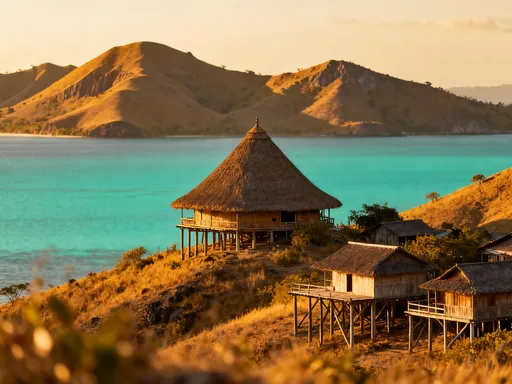
When I first stepped onto Komodo Island, I expected dragons and beaches—but not architecture that would blow my mind. Yet, nestled between rugged hills and turquoise waters, I discovered traditional villages with soaring peaked roofs and hand-built structures that blend seamlessly into the landscape. These aren’t just homes—they’re cultural masterpieces. Crafted from bamboo, thatch, and tropical hardwoods, they rise on stilts above the red-dirt ground, their conical roofs curving like waves against the sky. Every beam and woven wall tells a story of resilience, community, and harmony with nature. If you're heading to Komodo, knowing these architectural details will transform your trip from basic to unforgettable, turning simple sightseeing into a journey of deeper cultural connection.
First Impressions: Beyond the Dragons and Beaches
Most travelers arrive in Komodo after a flight into Labuan Bajo, the bustling gateway town on Flores Island. From there, a boat ride—often on a traditional phinisi or a modern speedboat—carves through the cerulean waters of the Flores Sea, revealing jagged islets and the first glimpses of Komodo National Park. The anticipation is high: visitors come for the legendary Komodo dragons, the pristine coral reefs, and the blush-pink sands of Padar Island. Few, however, prepare themselves for the quiet architectural beauty tucked within the island’s coastal villages. As the boat nears the dock, clusters of wooden homes appear, perched on stilts along the shoreline, their steep thatched roofs rising like crowns above the tree line.
The contrast between expectation and reality is striking. While wildlife remains the headline attraction, the built environment offers a more subtle but equally powerful narrative. These homes are not merely shelters; they are expressions of centuries-old adaptation to a demanding environment. The tropical sun beats down relentlessly, monsoon rains flood lowlands, and salt-laden winds erode weaker materials. Yet the structures endure, thanks to design choices honed over generations. Elevated floors protect against flooding and pests, while the height allows air to circulate beneath, cooling the interior. The steep pitch of the roofs sheds rainwater quickly, preventing leaks and structural damage. These are not accidental features—they are deliberate, intelligent solutions born from necessity.
What surprises many visitors is how seamlessly these homes integrate with the landscape. Unlike the uniform concrete buildings that dominate urban Indonesia, these dwellings appear to grow from the earth. Their organic shapes echo the surrounding hills, and the natural materials age gracefully, blending into the environment rather than standing in opposition to it. The lack of sharp edges or rigid symmetry gives the villages a soft, almost rhythmic presence. For travelers accustomed to fast-paced tourism, this quiet harmony offers a moment of pause—a reminder that human ingenuity can coexist with nature rather than dominate it.
Traditional Manggarai-Inspired Design in Coastal Villages
The architectural style seen in Komodo’s villages draws deep inspiration from the Manggarai people of western Flores, an ethnic group renowned for their sophisticated building traditions. While Komodo itself is sparsely populated, its cultural ties to Flores are strong, and this is especially evident in the design of homes and communal spaces. The most striking resemblance lies in the conical roof structures, reminiscent of the mbaru niang, the iconic ancestral houses of the Manggarai highlands. Though not exact replicas, the coastal versions adapt the same principles: a tall, circular or oval base supporting a towering thatched roof that can reach up to six meters in height.
These roofs are masterclasses in passive climate control. Made from alang-alang grass or sago palm thatch, they provide excellent insulation, keeping interiors cool during the day and warm at night. The thickness of the thatch—sometimes over half a meter—absorbs heat before it penetrates the living space. Bamboo walls, woven in tight patterns, allow for cross-ventilation while offering privacy and protection from wind. The elevated floors, typically supported by hardwood posts, lift the living area well above ground level, reducing moisture exposure and deterring insects and small animals. This combination of materials and design ensures comfort in a climate where temperatures regularly exceed 30°C and humidity hovers near 80 percent.
But functionality extends beyond physical comfort. The layout of these homes often reflects social hierarchy and family structure. In more traditional setups, separate rooms or sections may be designated for elders, married children, or guests, with the central space serving as a communal area for meals and gatherings. The height of the roof also plays a symbolic role—it represents status and spiritual connection, with taller roofs indicating greater family prestige. While modern influences have simplified some of these customs, the core design remains a testament to a culture that values both practicality and meaning in everyday life.
The use of locally sourced materials is another hallmark of this architectural tradition. Builders rely on what the land and sea provide: ironwood for structural posts, bamboo for walls and flooring, and thatch for roofing. Stone foundations anchor the homes in areas prone to erosion. These materials are not only sustainable but also biodegradable, minimizing environmental impact when structures are eventually replaced. Unlike imported cement or metal, which require transportation and energy-intensive production, local resources are renewable and culturally appropriate. This deep-rooted sustainability is increasingly relevant in an era of climate-conscious travel and conservation-focused development.
The Role of Community Layout in Village Planning
Walking through a traditional village in Komodo, one quickly notices that the arrangement of homes is neither random nor strictly utilitarian. Instead, there is a quiet order, a spatial logic shaped by generations of communal living. Houses are typically grouped in clusters, often arranged around a central open space known as a lape or communal courtyard. This area serves as the heart of village life—used for ceremonies, meetings, children’s play, and evening gatherings. The placement of homes around this core reflects kinship ties, with extended families living in close proximity. There is no formal zoning or architectural blueprint, yet the result is a functional and socially cohesive layout.
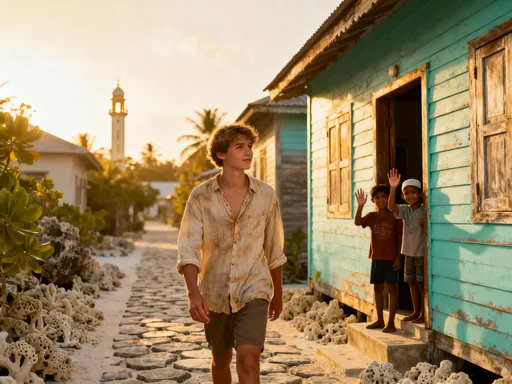
Pathways between homes are narrow and organic, often following the natural contours of the land. These footpaths, sometimes paved with flat stones or compacted earth, connect homes to shared facilities like water sources, fishing docks, or prayer spaces. Along these routes, small shaded platforms or benches appear under trees or eaves, offering resting spots for elders or places for neighbors to chat. These informal gathering points are a form of social architecture—designed not by architects, but by daily life. They encourage interaction, strengthen community bonds, and reflect a culture that values connection over isolation.
Compared to modern tourist developments, which often prioritize efficiency and profit, these traditional layouts feel inherently more harmonious. Resorts and hotels in the region may offer comfort and convenience, but they rarely foster the same sense of belonging. Their grid-like designs, sealed rooms, and private amenities create physical and social distance between guests. In contrast, the open, flowing structure of a Komodo village invites participation and observation. Visitors on guided tours often remark on the warmth of the community, not just because of hospitality, but because the environment itself promotes visibility, accessibility, and engagement.
This organic planning also demonstrates resilience. Without reliance on imported materials or complex infrastructure, these villages can be rebuilt or reconfigured with minimal disruption. When storms damage a roof or termites weaken a support post, repairs are made using the same methods and materials as before. There is no need for specialized contractors or industrial supplies. This self-sufficiency is a quiet strength, especially in a remote location where external support is limited. For travelers, witnessing this adaptability offers a powerful lesson in simplicity, sustainability, and the enduring value of community-based design.
Modern Influences vs. Cultural Preservation
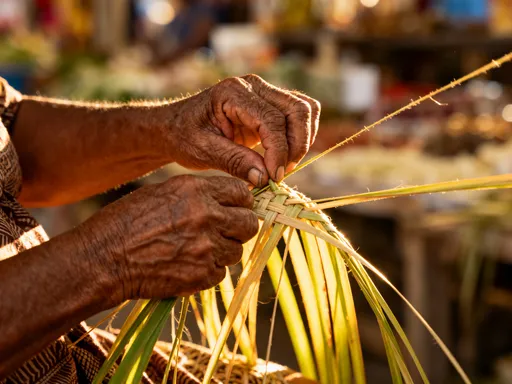
As tourism grows in Komodo National Park, so too does the pressure to modernize. New homes in some villages now feature concrete foundations, corrugated metal roofs, and glass windows—materials that promise durability and convenience. While these upgrades offer real benefits, such as improved weather resistance and longer lifespans, they also risk eroding the region’s architectural identity. The visual contrast between a traditional thatched home and a boxy concrete structure can be jarring, disrupting the aesthetic harmony that defines these coastal settlements. More concerning is the potential loss of traditional knowledge—when younger generations opt for modern construction, the skills of thatching, bamboo weaving, and timber framing may fade.
This tension between progress and preservation is not unique to Komodo, but it is particularly acute here due to the island’s protected status and cultural significance. Recognizing this, both government agencies and non-governmental organizations have initiated programs to support the continuation of traditional architecture. In some villages, new homes are built using modern materials but designed to mimic the forms of ancestral styles. For example, concrete posts may replace wooden ones, but they are shaped to resemble traditional pillars. Metal roofs are painted green or brown to blend with the landscape, and their slopes are designed to echo the steep pitch of thatched roofs. These hybrid approaches aim to balance durability with authenticity.
One notable effort is the integration of traditional design into eco-lodges and ranger stations within the national park. These structures serve functional purposes—housing staff, welcoming visitors, supporting conservation work—but they are built using local architectural cues. Elevated floors, natural ventilation, and locally inspired rooflines ensure they complement rather than dominate the environment. Some eco-lodges even employ local artisans to craft furniture and decorative elements, providing economic opportunities while preserving cultural expression. These projects demonstrate that modern needs do not have to come at the expense of heritage.
The challenge lies in scaling these successes. While pilot projects show promise, widespread adoption requires investment, education, and community involvement. Workshops that teach traditional building techniques to youth, incentives for using local materials, and design guidelines for new construction can all play a role. For travelers, supporting accommodations and tours that prioritize cultural authenticity sends a clear message: visitors value not just nature, but the human stories woven into it. When tourism rewards preservation, communities are more likely to maintain their architectural traditions for future generations.
Architectural Highlights in Rinca and Other Nearby Islands
While Komodo Island receives the most attention, neighboring Rinca Island offers a similar yet distinct architectural experience. Also home to Komodo dragons and part of the same national park, Rinca hosts several small villages where traditional building styles persist. The homes here share many features with those on Komodo—elevated floors, thatched roofs, bamboo walls—but subtle differences reflect local conditions. On Rinca, where terrain is slightly more varied and population density lower, homes are often more spread out, with greater distances between clusters. This dispersion influences social dynamics, with communal spaces less centralized but still present in the form of shaded meeting areas near water sources or docking points.
Adaptations are also visible in material use. In some Rinca villages, builders incorporate more stone into foundations due to the rocky soil, creating more permanent bases for wooden superstructures. The thatching techniques vary slightly as well, with some roofs using tighter weaves to withstand stronger coastal winds. These small variations highlight the flexibility of traditional architecture—it is not a rigid template, but a living practice that evolves with environmental demands.
Conservation regulations in the national park limit new construction, especially in core zones, but this constraint has inspired innovative, low-impact designs. Ranger stations and research outposts are built to blend into the landscape, using natural materials and elevated platforms to minimize ground disturbance. Some facilities include open-air classrooms or observation decks that double as community spaces, fostering collaboration between park staff and local residents. These structures prove that functional buildings can coexist with ecological and cultural sensitivity.
Smaller coastal settlements on islands like Gili Motang and Nusa Kode, though largely uninhabited, occasionally feature remnants of temporary shelters or fishing huts. These simple structures—often just a roof on stilts—reflect the seasonal use of these areas by local fishermen. Their minimalist design underscores the principle of using only what is necessary, leaving no lasting footprint. For travelers on extended boat tours, spotting these humble shelters adds another layer to the architectural narrative: one of transience, resourcefulness, and deep respect for the environment.
How to Experience These Structures Respectfully
Visiting these traditional villages is a privilege, not a right, and doing so with respect is essential. The best way to engage is through guided community tours, which are increasingly available in villages near Komodo and Rinca. These tours are led by local residents who provide context, share stories, and ensure that visitors follow cultural protocols. It is important to ask permission before entering private property or photographing people. While the architecture may be visually captivating, the homes are lived-in spaces, not museum exhibits. A simple smile, a polite greeting, and a willingness to listen go a long way in building trust and mutual respect.
Cultural sensitivity extends beyond behavior. Dressing modestly—covering shoulders and knees—is appreciated, especially in more conservative communities. Removing shoes before stepping onto a home’s platform is often expected, and offering a small gift, such as school supplies or food, can be a thoughtful gesture if welcomed. Travelers should avoid touching or leaning on structures, as even light contact can cause wear over time. The goal is to observe without disrupting, to appreciate without appropriating.
The best times to visit are during daylight hours, particularly in the morning or late afternoon, when families are active and light conditions are ideal for photography. Avoiding peak heat hours also shows consideration for both hosts and guides. For those seeking deeper engagement, participating in a community-based tourism program—such as a homestay or craft workshop—offers a more immersive experience. These initiatives not only provide authentic cultural exchange but also generate income that supports preservation efforts.
By choosing responsible tourism options, visitors help ensure that these architectural treasures remain intact. Every dollar spent on local guides, traditional meals, or handmade souvenirs contributes to the community’s ability to maintain its heritage. When travelers value culture as much as scenery, they become allies in preservation, not just spectators. This shift in mindset—from passive observer to active participant—can make all the difference in safeguarding Komodo’s living architecture for years to come.
Why Architectural Awareness Enriches Your Journey
Tourism in Komodo often revolves around checklists: see the dragon, hike the ridge, swim the coral garden. While these experiences are undeniably thrilling, they risk reducing the destination to a series of photo opportunities. By contrast, paying attention to architecture invites a slower, more thoughtful way of traveling. It encourages visitors to look beyond the surface, to notice the craftsmanship in a woven wall, the intention behind a roof’s curve, or the social logic of a village layout. This deeper observation transforms the journey from consumption to connection.
Understanding the design of these homes also deepens appreciation for local ingenuity. These structures are not primitive—they are highly adapted solutions to complex environmental challenges. They reflect centuries of trial, error, and refinement, embodying a wisdom that modern architecture often overlooks. When travelers recognize this, they begin to see the people of Komodo not as backdrop to nature, but as active stewards of their environment. Their homes are testaments to resilience, creativity, and cultural continuity.
Moreover, architectural awareness fosters humility. In a world dominated by steel, glass, and artificial climate control, these simple wooden homes remind us that comfort and beauty do not require excess. They challenge the assumption that progress means replacement, suggesting instead that tradition and innovation can coexist. For women aged 30 to 55—many of whom manage households, value sustainability, and seek meaningful travel experiences—this message resonates deeply. It aligns with a desire for authenticity, balance, and purpose in both life and travel.
In the end, Komodo’s true beauty lies not just in its dragons or beaches, but in the quiet dignity of its human settlements. These homes, born of necessity and shaped by culture, stand as quiet monuments to a way of life that honors both people and planet. When you visit, take a moment to look up from the trail, step off the beaten path, and see the artistry in the everyday. Let the soaring roofs and hand-woven walls tell their story. Because once you notice them, your journey will never be the same.