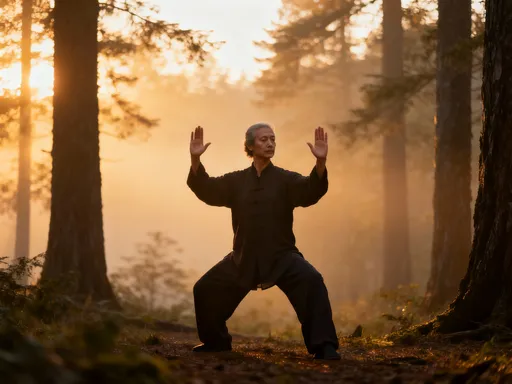
Why Meditation Changed My Mental Game — A Proven Path to Daily Calm
Mental clutter is real — and it affects focus, sleep, and overall health. As someone who once dismissed meditation as “just sitting quietly,” I was skeptical. But after weeks of consistent practice, the shift was undeniable. My anxiety dropped, my clarity improved, and I felt more in control. This isn’t about magic or instant fixes — it’s about science-backed, simple steps that actually work. Let’s explore how meditation reshapes mental health and boosts daily well-being.
The Mental Health Crisis We’re Ignoring
In today’s fast-paced world, mental fatigue has become a quiet epidemic. Millions of people wake up already feeling behind, juggling responsibilities at work, managing household duties, and trying to maintain relationships — all while carrying an invisible weight of stress. It’s not uncommon to hear phrases like “I can’t switch off” or “My mind won’t stop racing” in everyday conversation. These aren’t just expressions; they reflect a deeper issue rooted in chronic overstimulation. The human nervous system, designed for short bursts of alertness followed by rest, is now in a near-constant state of activation due to digital overload, financial pressures, and societal expectations.
Consider the typical evening routine: a parent finishes helping children with homework, answers work emails, prepares meals, and collapses into bed — only to lie awake, mentally replaying the day’s events or worrying about tomorrow. Sleep disturbances are one of the most common signs of unmanaged stress, yet many accept them as normal. According to global health surveys, anxiety and stress-related disorders have risen steadily over the past two decades, with women in the 30–55 age range reporting higher levels of emotional exhaustion than any other demographic. Despite growing awareness, there remains a significant gap between knowing one is stressed and taking effective action to reduce it.
Many turn to quick fixes — late-night snacking, screen scrolling, or overscheduling weekends in search of relief — but these often provide only temporary distraction. What’s missing is a sustainable, accessible practice that directly addresses the root cause: a mind overwhelmed by constant input. Meditation is not a new-age fad; it is a practical, evidence-based tool that helps regulate the nervous system and restore mental balance. Unlike medication or therapy, which are essential for clinical conditions, meditation is something anyone can begin today, regardless of background or experience. It requires no special equipment, only a few minutes and a willingness to pause.
Neuroscience now confirms what ancient traditions have long taught: the brain can change in response to intentional mental training. This concept, known as neuroplasticity, means that regular meditation strengthens areas responsible for attention, emotional regulation, and self-awareness. By introducing meditation into daily life, individuals can build resilience against the mental strain that so many silently endure. It’s not about eliminating stress entirely — that’s neither possible nor desirable — but about changing one’s relationship to it. With practice, the mind learns to respond rather than react, creating space between stimulus and response.
What Meditation Really Is (And What It Isn’t)
One of the biggest obstacles to starting meditation is misunderstanding what it actually involves. Many assume it requires complete silence of the mind, hours of sitting cross-legged, or a spiritual awakening. These misconceptions can make the practice seem unattainable or irrelevant to daily life. The truth is simpler: meditation is mental training. Just as physical exercise strengthens muscles, meditation strengthens the mind’s ability to focus, observe, and let go. It’s not about achieving a blank mind but about becoming aware of your thoughts without getting caught in them.
Think of the mind like a browser with dozens of tabs open. Meditation is the act of noticing how many tabs are running, closing some, and choosing where to direct your attention. You don’t have to stop thoughts from arising — that’s impossible. Instead, you learn to observe them as passing events, like clouds moving across the sky. This shift in perspective reduces the power of repetitive, anxious thinking. Over time, this awareness becomes a skill that extends beyond meditation sessions into everyday decision-making and emotional responses.
There are several forms of meditation, each with unique benefits. Mindfulness meditation involves paying attention to the present moment, often using the breath as an anchor. Focused attention meditation trains concentration by returning attention to a single point, such as a sound or a word repeated silently. Body scan meditation increases bodily awareness by systematically bringing attention to different parts of the body. Loving-kindness meditation cultivates compassion by silently offering well-wishes to oneself and others. While these methods differ in approach, they share a common goal: to increase self-awareness and reduce mental reactivity.
What makes meditation powerful is not its complexity but its consistency. Research shows that even brief daily sessions — as short as five to ten minutes — lead to measurable changes in brain activity and structure. These changes are not reserved for monks or spiritual experts; they occur in ordinary people who practice regularly. The key is regularity, not duration. A person who meditates for five minutes every day will likely see more benefit than someone who meditates for an hour once a week. Meditation is not a performance; there is no “right” way to do it, only the willingness to show up and try.
Why Science Supports Daily Meditation
The growing body of scientific research on meditation has transformed it from a fringe wellness trend into a respected component of mental health care. Studies conducted at major medical institutions have demonstrated that consistent meditation practice leads to reduced levels of cortisol, the primary stress hormone. High cortisol over time is linked to anxiety, weight gain, sleep disruption, and weakened immunity. By lowering cortisol, meditation helps the body return to a state of balance, known as homeostasis, where healing and restoration can occur.
Brain imaging studies reveal even more compelling evidence. Regular meditators show increased gray matter density in the prefrontal cortex, the region responsible for decision-making, emotional regulation, and focused attention. This area tends to shrink under chronic stress, impairing cognitive function. Meditation counteracts this effect, essentially building a stronger mental “muscle” for managing challenges. Additionally, the amygdala, the brain’s fear center, shows decreased activity and volume in long-term practitioners, which correlates with lower levels of anxiety and improved emotional resilience.
These neurological changes translate into real-world benefits. People who meditate regularly report greater clarity, improved concentration, and a heightened ability to manage difficult emotions. They are less likely to react impulsively in stressful situations and more likely to respond thoughtfully. This doesn’t mean they never feel upset or overwhelmed — emotions are a natural part of life — but they recover more quickly. Emotional regulation, once thought to be a fixed trait, can be developed like any other skill through practice.
Secondary health benefits further reinforce meditation’s value. Improved sleep quality is one of the most commonly reported outcomes, as the practice calms the nervous system and reduces nighttime rumination. Lower blood pressure has also been observed in clinical settings, making meditation a supportive tool for cardiovascular health. Some studies suggest a positive impact on immune function, with meditators showing stronger antibody responses to vaccines compared to non-meditators. While meditation is not a cure for illness, it enhances the body’s natural ability to maintain balance and resist disease.
The Hidden Barriers That Stop People From Starting
Despite the evidence, many people hesitate to begin meditation. Common barriers are often rooted in misconceptions or fear of failure. One of the most frequent excuses is lack of time. “I’m too busy” is a familiar refrain, especially among working parents and caregivers. Yet meditation doesn’t require large time investments. Starting with just three to five minutes a day can initiate positive changes. The key is consistency, not length. Think of it like brushing your teeth — it’s not about how long you brush, but that you do it every day.
Another major obstacle is the belief that one must “clear the mind” to meditate successfully. This expectation sets people up for frustration, as thoughts will inevitably arise. The goal is not to stop thinking but to notice when the mind has wandered and gently bring it back. This act of redirection is the core of the practice. Each time you notice a thought and return to your anchor — whether it’s the breath, a sound, or bodily sensation — you are strengthening your attention, much like lifting a weight builds muscle.
Some describe meditation as feeling “weird” or uncomfortable, especially at first. Sitting still with one’s thoughts can bring up emotions or memories that have been buried under daily busyness. This is not a sign that meditation is wrong; it’s a sign that it’s working. The mind is beginning to process what has been ignored. Discomfort is temporary and often diminishes with continued practice. Creating a comfortable space — a quiet corner, a supportive cushion, or soft lighting — can make the experience more inviting.
Perfectionism also deters many from starting. People worry they’re “doing it wrong” or not benefiting enough. But meditation is not about performance. There is no scorecard. Missing a day doesn’t erase progress. What matters is returning to the practice without judgment. Self-compassion is a vital part of the process. Instead of criticizing yourself for being distracted, acknowledge the effort it took to sit down and try. This mindset shift — from striving to allowing — is often where the deepest healing begins.
How to Build a Realistic Meditation Habit
Starting a meditation habit doesn’t require dramatic changes. The most effective approach is gradual and integrated into existing routines. Begin with a small commitment — just three to five minutes per day. Choose a consistent time, such as after brushing your teeth in the morning or before turning off the lights at night. Linking meditation to an established habit increases the likelihood of sticking with it. This technique, known as habit stacking, leverages the brain’s natural tendency to associate actions.
For beginners, guided meditations are highly effective. Numerous apps and online resources offer structured sessions led by experienced teachers. These provide clear instructions and help maintain focus, especially when the mind feels restless. Using a timer with a gentle bell can also be helpful, allowing you to meditate without worrying about the time. Some people find wearable devices that track heart rate variability or breathing patterns motivating, as they offer feedback on physiological changes during and after practice.
Several beginner-friendly techniques can ease the learning curve. Breath awareness involves focusing on the natural rhythm of inhalation and exhalation. Counting breaths — such as counting up to ten and then starting over — adds a simple cognitive anchor. Sound-based meditation uses ambient noise or a repeated phrase, known as a mantra, to maintain focus. Each method offers a way to train attention without overwhelming the mind.
Equally important is cultivating a non-judgmental attitude. Some days the mind will be calm; other days it will feel chaotic. Both experiences are valid. When you miss a session, respond with kindness, not criticism. Think of meditation as a lifelong practice, not a short-term goal. Progress is subtle and cumulative, like the slow growth of a tree. Over time, the habit becomes less about effort and more about natural inclination — a daily pause that nourishes the mind and body.
Integrating Mindfulness Into Everyday Life
Meditation doesn’t have to be confined to a cushion or quiet room. Its true power emerges when mindfulness extends into daily activities. Mindful walking, for example, involves paying attention to each step — the lifting, moving, and placing of the foot. Even a short walk to the mailbox or around the house can become a meditation when done with full awareness. The same principle applies to eating: noticing the texture, temperature, and flavor of each bite slows the process and enhances enjoyment while supporting digestion.
Listening mindfully transforms conversations. Instead of planning your response while someone else speaks, you give them your full attention. You notice their tone, facial expressions, and body language. This kind of presence strengthens relationships and reduces misunderstandings. Similarly, pausing before responding in emotionally charged moments creates space to choose a thoughtful reaction rather than an impulsive one. These micro-moments of awareness build emotional intelligence over time.
Routine tasks offer rich opportunities for mindfulness. While washing dishes, you might notice the warmth of the water, the feel of soap bubbles, and the sound of clinking plates. While folding laundry, you can focus on the texture of the fabric and the motion of your hands. These moments, often considered mundane, become opportunities to reconnect with the present. The mind is no longer lost in the past or future but grounded in what is happening right now.
Over time, this expanded awareness reduces automatic reactivity. You begin to notice patterns — how certain thoughts trigger stress, how specific situations provoke frustration. With this insight, you can respond differently. Instead of snapping at a child for spilling milk, you take a breath and respond calmly. These small shifts accumulate into greater emotional balance and resilience. Mindfulness becomes not just a practice but a way of living — a continuous return to presence amid life’s demands.
When to Seek Professional Support Alongside Practice
While meditation offers significant benefits, it is not a substitute for professional mental health care. For individuals experiencing persistent anxiety, depression, or trauma, meditation should complement, not replace, treatment from a licensed therapist. In some cases, sitting with intense emotions during meditation can be overwhelming, especially without proper support. This is not a reason to avoid meditation but a reminder that healing often requires multiple approaches.
Mindfulness-Based Stress Reduction (MBSR), developed in a medical setting, is one example of how meditation is integrated into clinical care. This structured program combines mindfulness practices with education about stress and coping strategies. It has been used in hospitals and clinics to help patients manage chronic pain, anxiety, and illness-related distress. Similarly, therapists may incorporate mindfulness techniques into cognitive behavioral therapy (CBT) to enhance emotional regulation and self-awareness.
If symptoms interfere with daily functioning — such as difficulty getting out of bed, persistent hopelessness, or inability to concentrate — it’s important to seek professional guidance. A mental health provider can assess the situation and recommend appropriate treatment, which may include therapy, medication, or both. Meditation can be a valuable part of recovery, but it works best within a broader support system.
Self-care and professional help are not opposing choices; they are complementary expressions of self-respect. Acknowledging the need for support is a sign of strength, not weakness. Just as you would see a doctor for a physical ailment, seeking help for emotional or psychological struggles is an act of courage and responsibility. Meditation can empower you to participate actively in your healing, but it does not have to be done alone.
Meditation isn’t a quick fix — it’s a lifelong skill that cultivates mental clarity, emotional stability, and physical well-being. The benefits grow quietly but steadily, like roots beneath the surface. By making space for stillness, we reclaim control over our attention, our reactions, and our health. This practice isn’t about escaping life — it’s about showing up for it, fully.